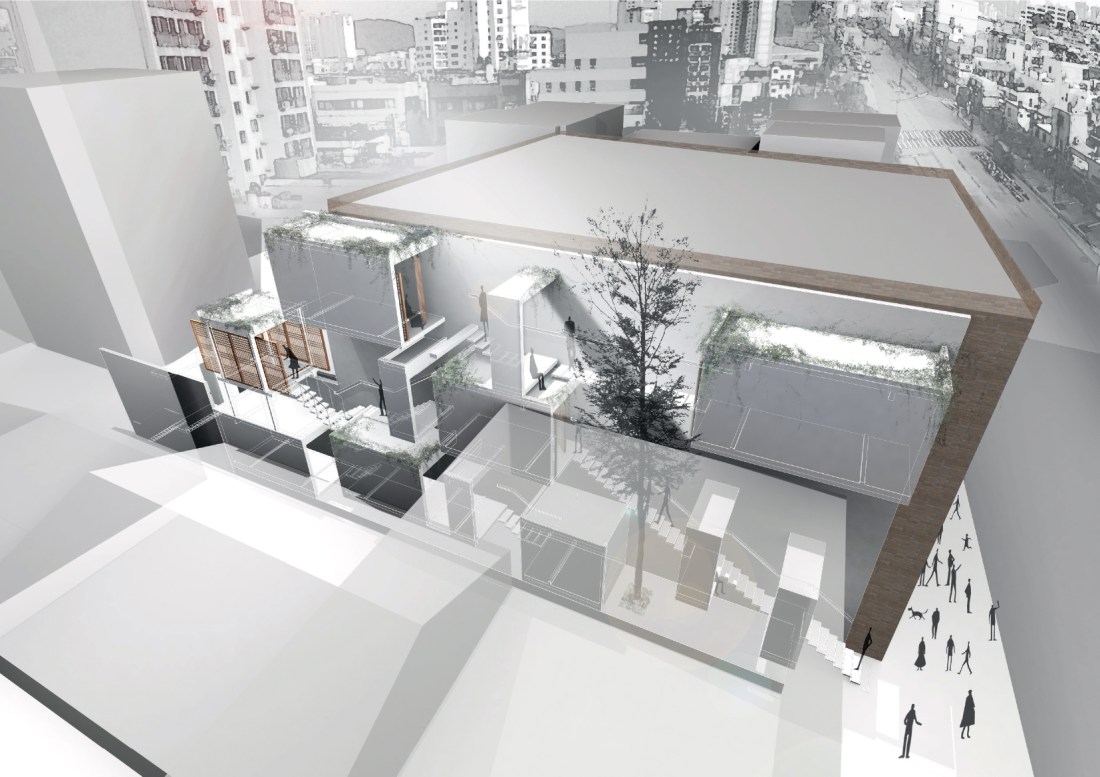

Proposal for writer’s dwelling
STUDIO: Summer Workshop at Myongji University / 2nd years
INSTRUCTOR: Ian F. Terbaner, Prof. / AIA
Director of Masters Thesis / Boston Architectural College
ian.taberner@the-bac.edu
CONTRIBUTION: Individual work
WORKING PERIOD: July. 2008 (4 weeks)
LOCATION: Yongin, Korea
TYPE: Contemporary Residential Space

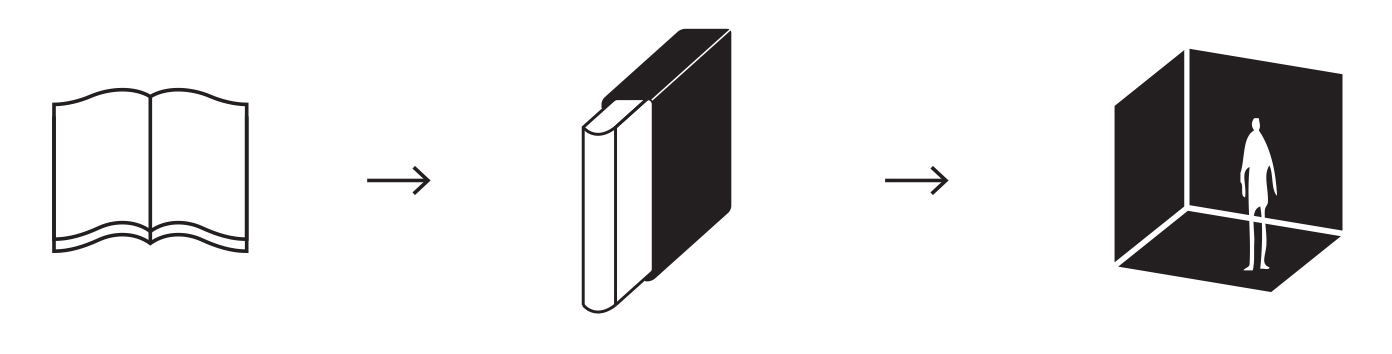
Space for a book and the writer
This project aims to rejuvenate abandoned space in our city. Small space between two ordinary buildings has given which is narrow, dark and wet. There are thousands of these spaces in our city that you can easily find, even if you cannot recognize. The design process started choosing a book that I like. As a second step, the book cover for the book has designed, and space for the writer. Finally, the design idea becomes a small house for the writer in the narrow space between buildings. Space stands freely and offers minimum necessity for living.
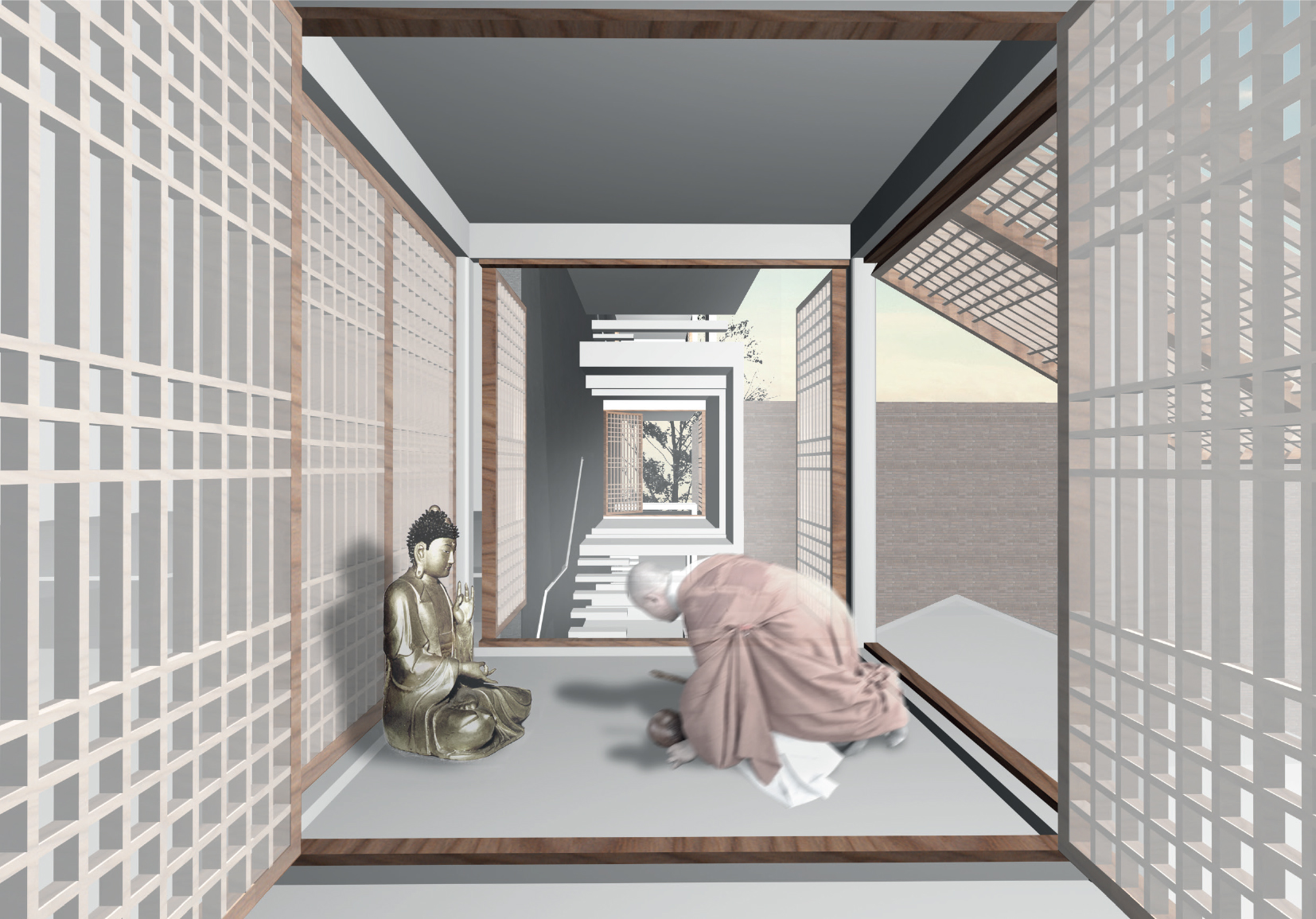
A poetry book called “Pung-kyoung” has chosen, meaning “scenery” in Korean. The writer is one of the famous Buddhist monks in Korea. He paints traditional Korean drawings for his meditation. In this book, he draws life of monks in the temple, and he also shows his philosophy in poems. Each page shows a beautiful colour with the peaceful atmosphere of a Buddhist temple. In his drawings, you can find the beauty of Korean temple and nature, and poems show the way of thinking as a monk.
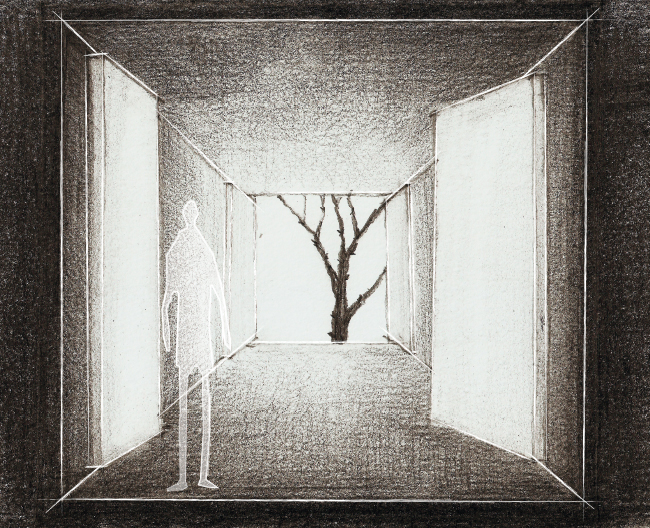
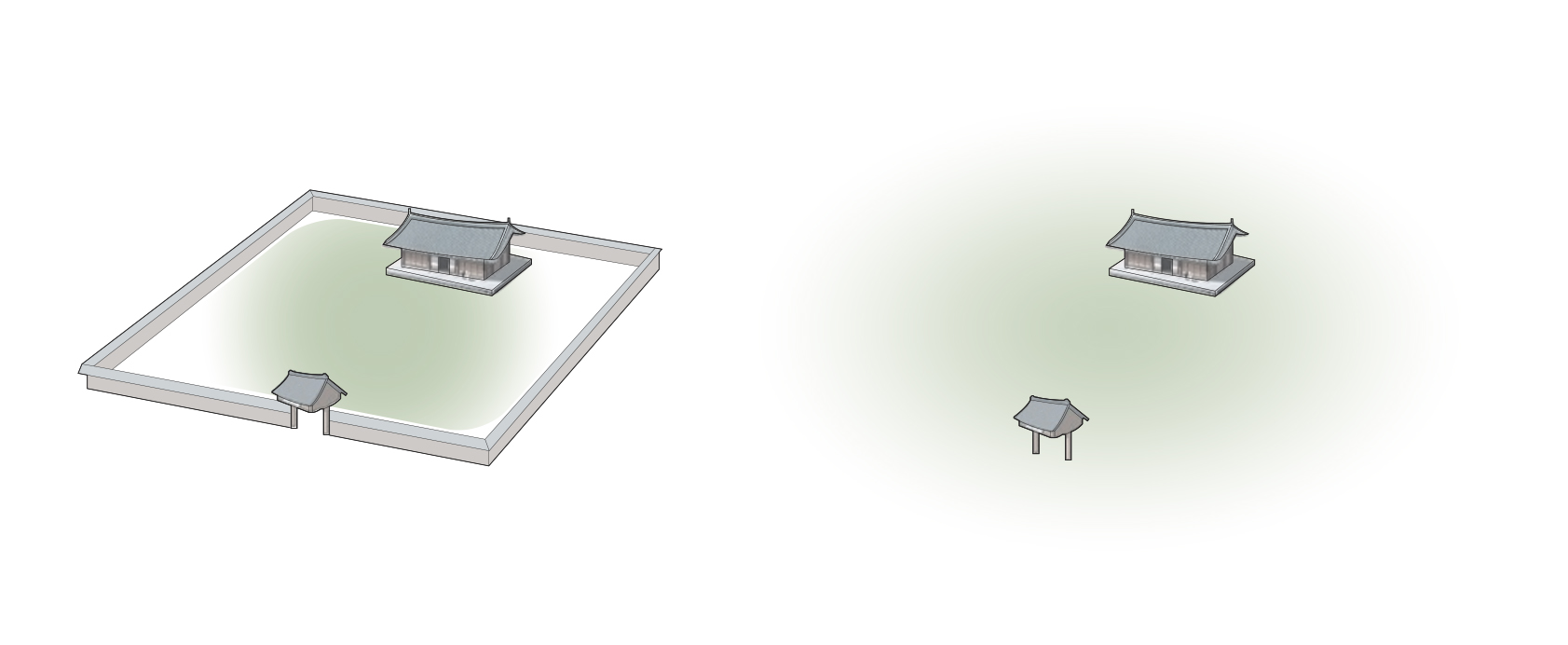
In general, space is limited by the structure of the boundary such as a wall or hedge. In this case, the gate connects inside and outside space. On the contrary, not only the gate without the wall connects two places but it also has metaphorical and symbolic meanings. Space over the gate can be a whole of nature or another world for Buddha.

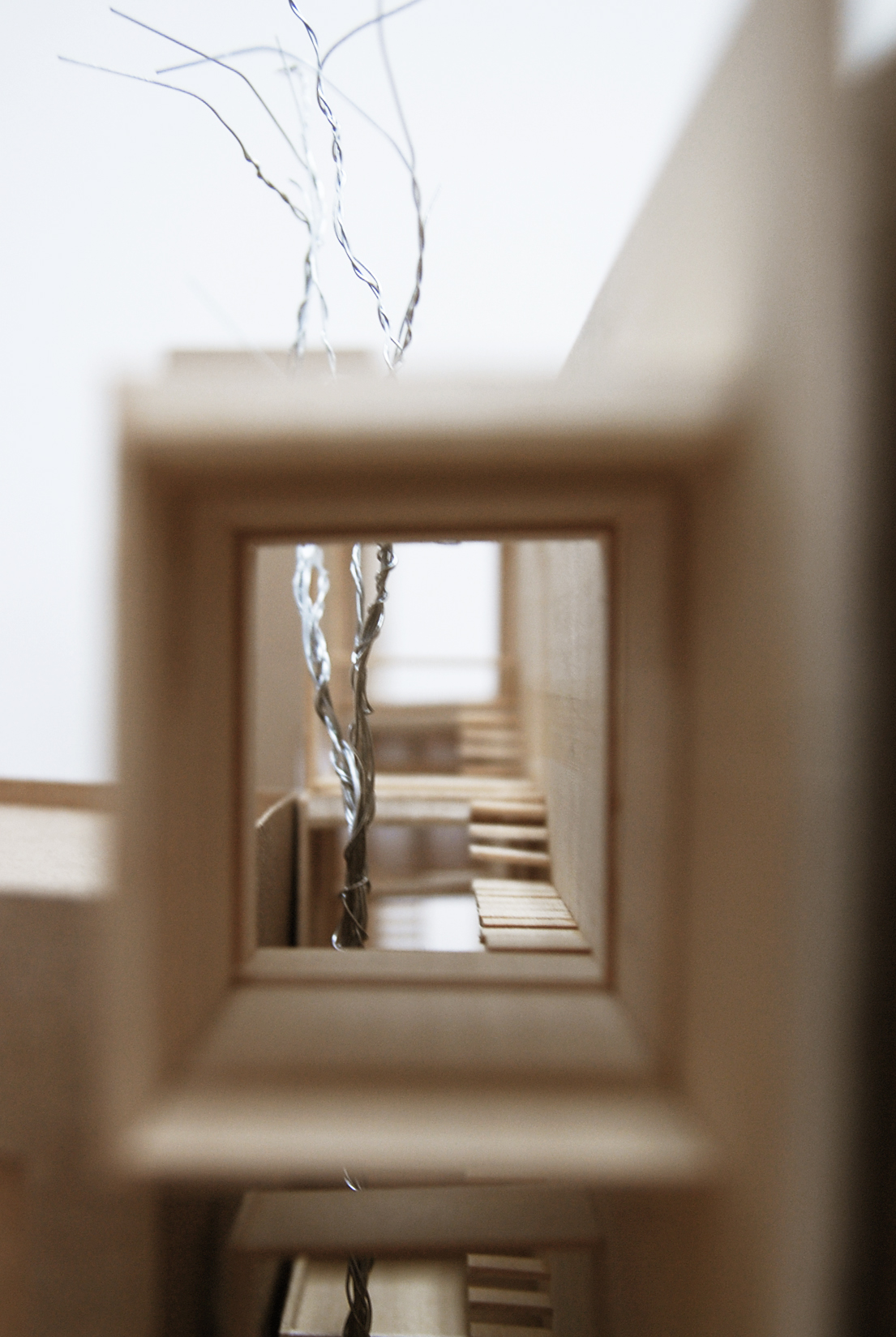
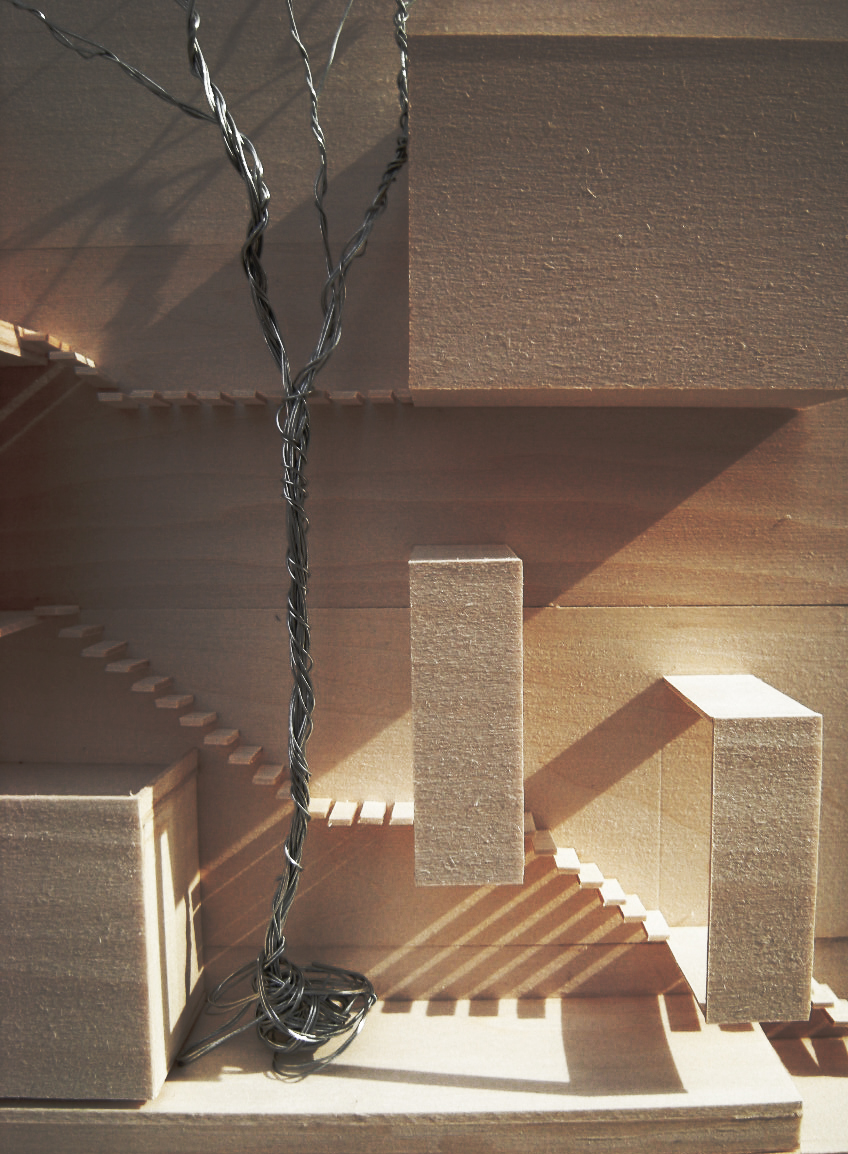
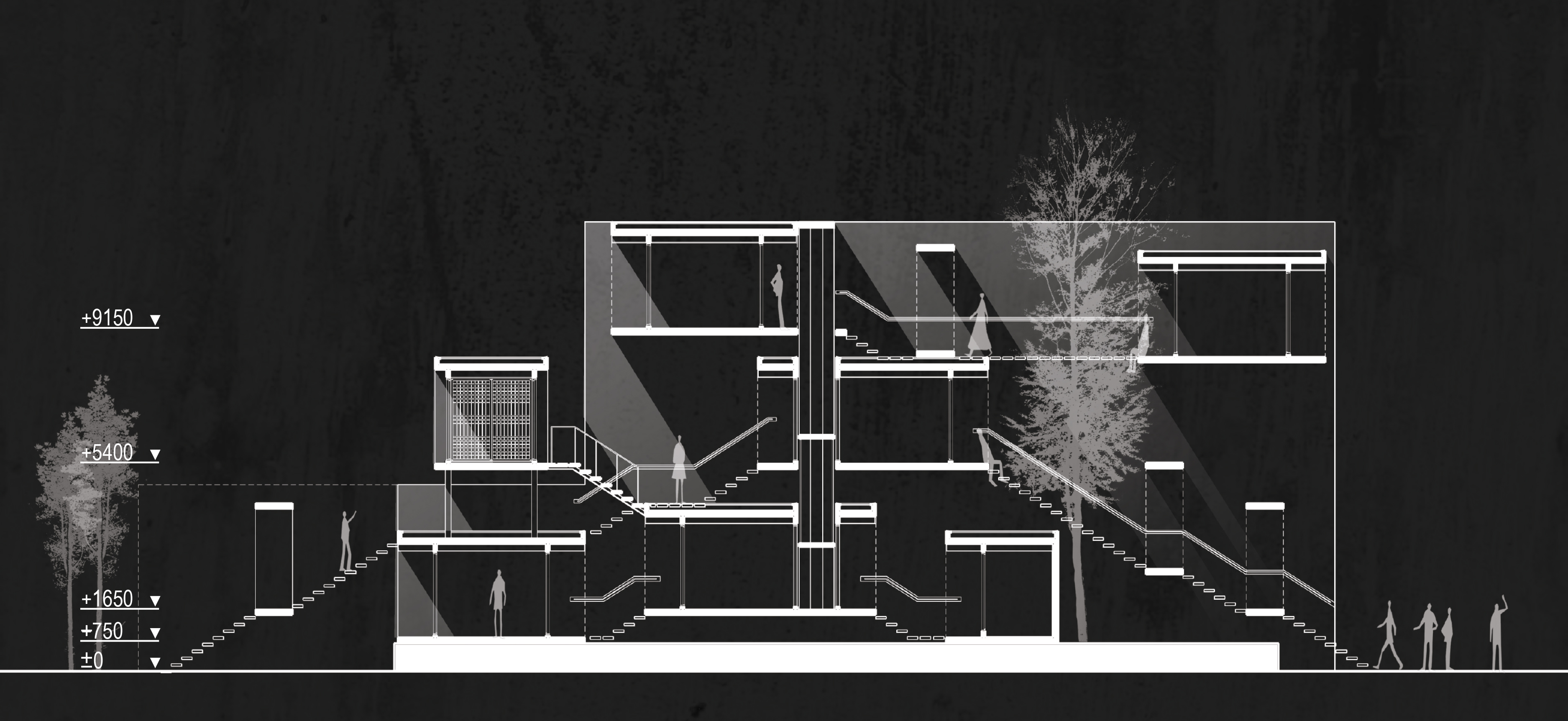
The site locates beside three stories buildings. Getting sunlight and views from inside is hard because of its condition. What I focus is that how to bring the nature to the site. The idea is creating many frames which hang on the free-standing wall structure. The frames which resemble small containers hold the minimum necessities of life. Sunlight will come through between boxes, and these spaces offer a great atmosphere of meditation. Moreover, temples locate historically in the mountain, but these days many temples move to cities where people can visit with great ease. This project can be an alternative way that the temples get close to the public.
 LEE DOO